Why an Automatic Water Dispenser Pump Can Make Drinking Water Easier and More Hygienic.
It’s 7 a.m., you’re already late, and the 20-litre water can is nearly full. You lift it, tilt it, spill a little on the floor, and promise yourself there’s a better way. For many households, hostels, and offices, that awkward daily lift is just accepted as normal — but it doesn’t have to be.
The Everyday Struggle Nobody Talks About:
A full 20-litre bottle weighs around 20 kilograms. Lifting and tilting that much weight repeatedly puts strain on your back, wrists, and shoulders — especially for students, elderly family members, pregnant women, or anyone already dealing with joint or back discomfort.
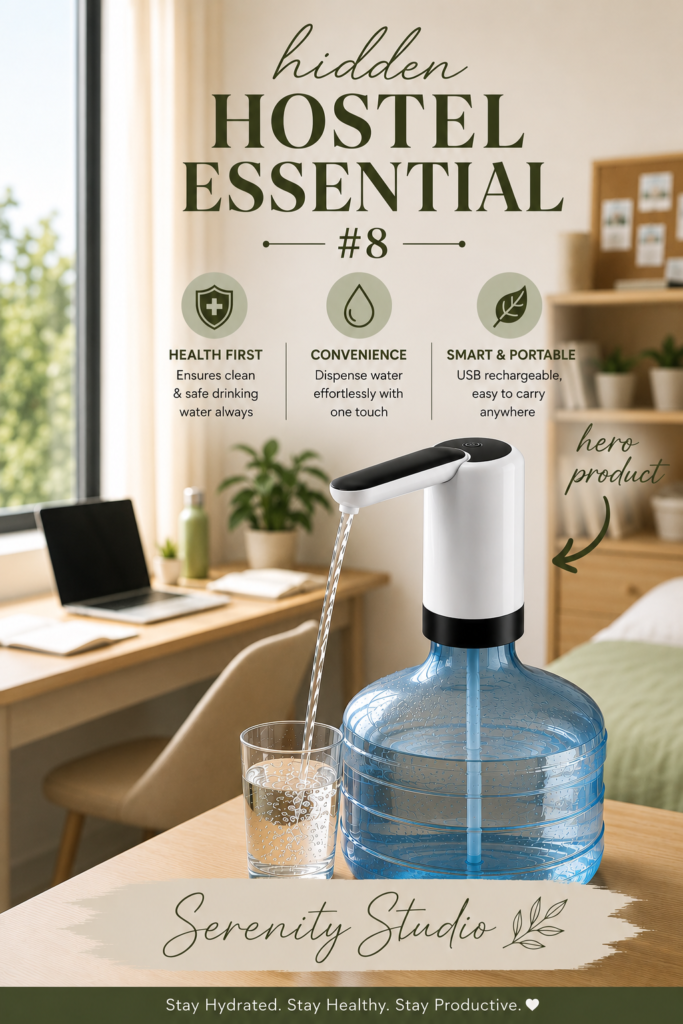
Ergonomically, the problem isn’t just the weight; it’s the awkward angle. A 20 litre water bottle pump removes the need to lift at all, letting water come to you instead.
The Hygiene Angle Worth Understanding:
Manual pumps and open bottle mouths get touched many times a day by many different hands. If hands or equipment aren’t clean, that’s a realistic route for germs to transfer onto the bottle opening or spout — basic hygiene principles, not scare tactics.
An automatic water dispenser pump reduces repeated hand contact because you press once and walk away. That said, hygiene depends on maintenance: the nozzle and the area around the charging port should be wiped clean regularly, and the pump shouldn’t be left sitting in dust.
One important clarification: an electric water dispenser or portable water dispenser is a convenience tool, not a purifier. It doesn’t filter, treat, or improve water quality. Safe drinking water still depends entirely on your source — your supplier, your purifier, or your municipal supply.
Where It Actually Makes Sense:
Shared spaces benefit most: hostels and PG accommodations where lifting help isn’t available, offices with constant use, homes with elderly members, and shared apartments where a drinking water dispenser simplifies everyone’s routine.
There’s also a subtle behavioural benefit — when water is easier to reach, people tend to drink it more often. Convenience quietly supports hydration.
The Honest Drawbacks:
A water dispenser pump needs charging or batteries, so it can run out at inconvenient moments. Build quality varies widely between brands, and very cheap models may leak or fail early. It also needs regular cleaning to stay hygienic.
The Bottom Line:
A water bottle pump solves a real, physical, daily problem — but it isn’t magic. Weigh how often you lift, who lifts, and whether you’ll maintain it. Decide from need, not impulse.
- Automatic Water Dispenser Pump for 20 Litre Bottle, Portable USB Rechargeable: https://link.amazon/B00OGVYnL
- Automatic Water Dispenser Pump for 20 Litre Bottle, 1200Mah Battery USB Rechargeable: https://link.amazon/B00HBlCzA
Thankyou for reading this blog..